


Forests have a way of capturing our imagination. With each rustle of leaves and flicker of sunlight through the canopy, the woods whisper stories — of animals hidden in the shadows, of trees that have stood for centuries, and of secrets waiting to be uncovered. These are the places where I look for fairy tales to come to life, where seasons transform the landscape into something entirely new, and where I always feel a bit of awe mixed with joyful melancholy. They’re places of wonder and quiet discovery where you have to look closely to see the spider that matches the tree’s bark or find the faint claw marks that hint at a recent visitor. Each sign tells a story — and when you are curious, those stories can lead you somewhere magical.
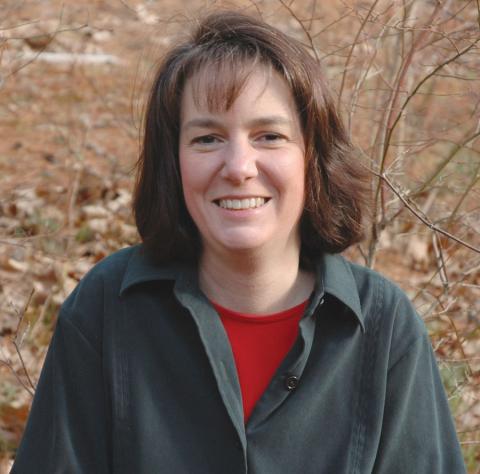
That’s exactly what happened to award-winning author and nonfiction champion Melissa Stewart. A simple hike in the woods — and a chance encounter with a hollow tree — sparked a question that wouldn’t let go and became the seed for an extraordinary journey through nature, research, and writing, culminating in the fascinating Tree Hole Homes: Daytime Dens and Nighttime Nooks.
Melissa has written more than 200 nonfiction books for children and is known for making complex scientific ideas engaging and accessible. Through her highly-regarded website(opens in a new window), which features a rich array of nonfiction reading and writing resources, Melissa inspires educators, students, and fellow writers to observe the world closely and ask big questions — just as she did when she looked inside that mysterious tree. Melissa is a wonderful friend to Reading Rockets and we are so delighted to welcome her back to Book Life.
Inspired by Nature by Melissa Stewart
There’s nothing more magical than hiking through a cool, shady forest full of towering trees. And if you look closely, each tree can tell you something about the creatures that depend on it.
Do you see fungi growing on the tree? Are there tiny holes where a woodpecker has tunneled to capture tasty insects? Do you see scratch marks made by a bear cub as it climbed to safety? I’m always on the lookout for clues like these.
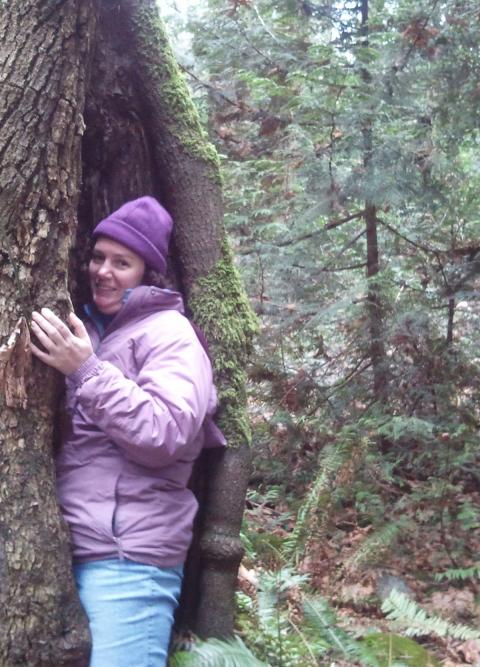
One day, while I was hiking in the woods, I spotted a tree with a hole big enough for me to slip inside.
As looked up into the hollow tree, I was mesmerized by the mysterious nooks and crannies and tiny winding passageways I saw. They made me wonder: What would it be like to live inside a tree?
That experience inspired me. And it made me curious. I knew right away that I wanted to write a book about tree hole homes.
When I got home, I went to work. First, I created a file on my computer and leafed through my nature journals for information. I found notes about squirrels and mice, owls and chickadees.
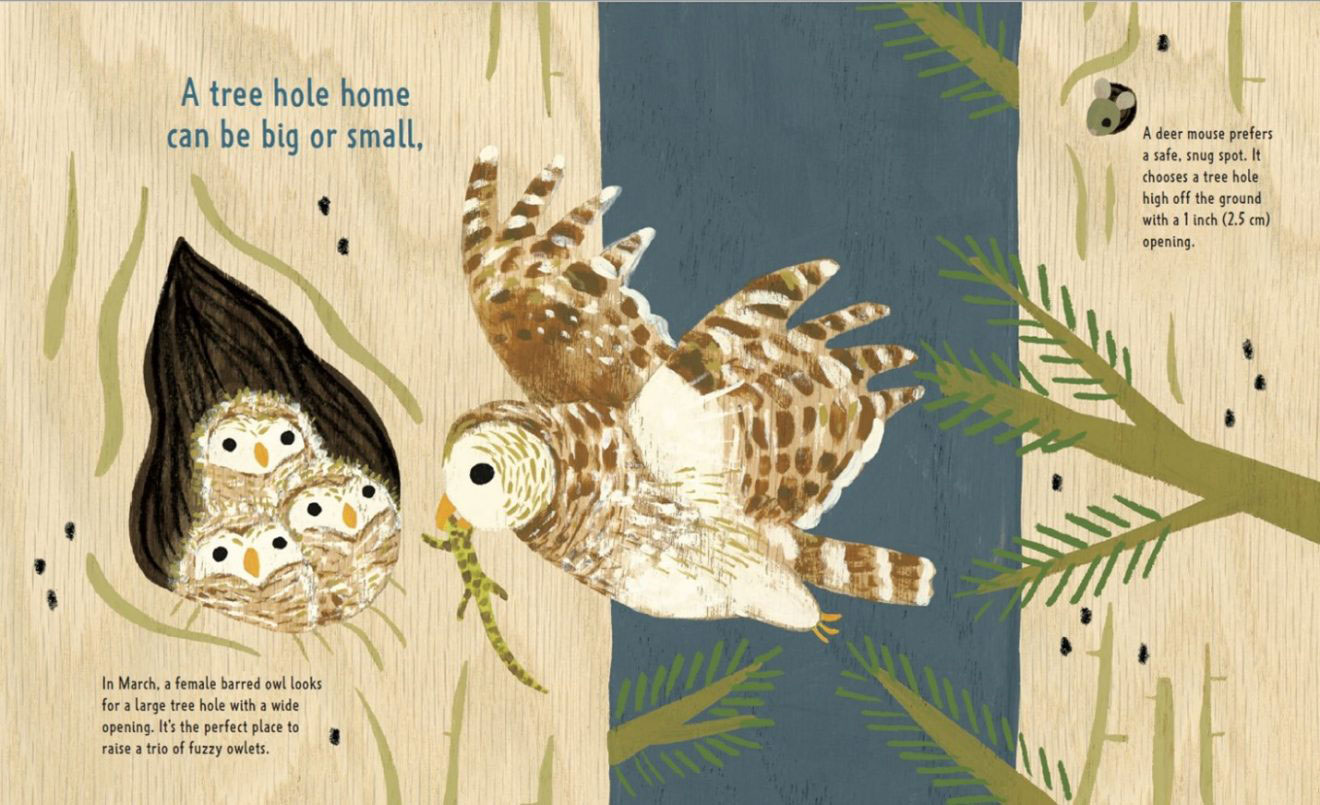
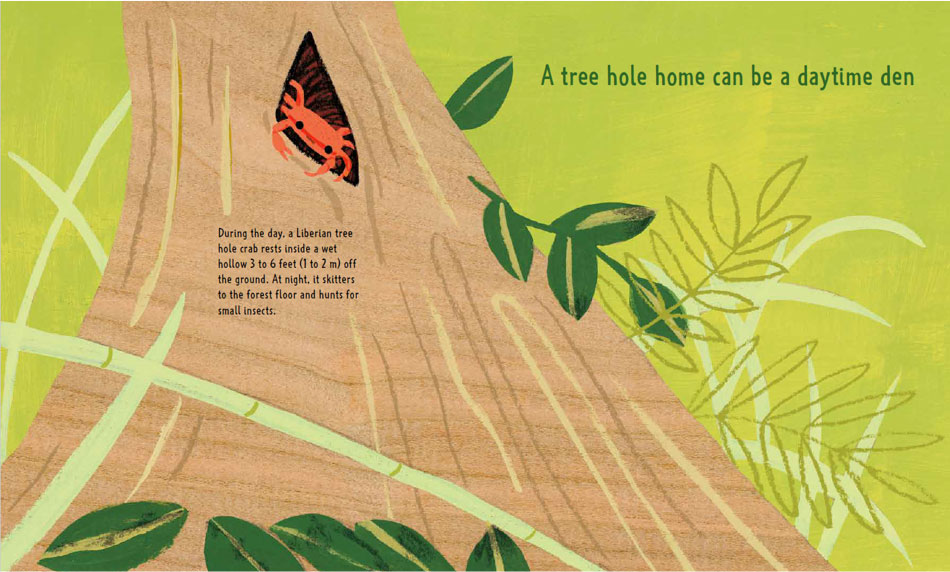
Next, I started paying attention. Whenever I read or heard anything about tree holes or animals that live in them, I added more notes to the file. I was astonished to discover that black spiny-tailed iguanas sleep in tree holes at night and Liberian tree hole crabs rest inside trees all day long.
I was also excited to learn that some tree frogs attach their eggs to the walls of tree holes filled with water. When the tadpoles hatch, they fall into the water and start swimming around. Amazing!
Eventually, I knew I had enough information for a book, but I didn’t know how to structure it or how the book should begin or end. I was stuck.
But then, one day, I stumbled upon another large tree hole. They way the light hit it really captured my imagination.
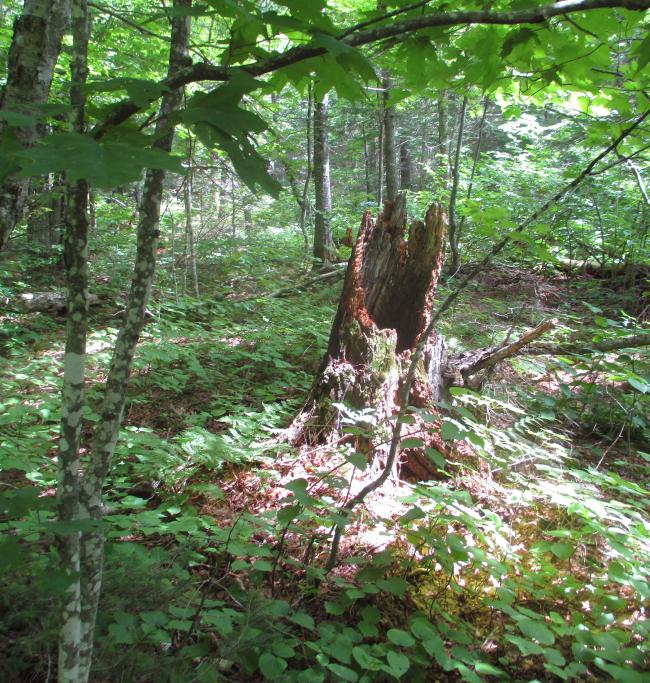
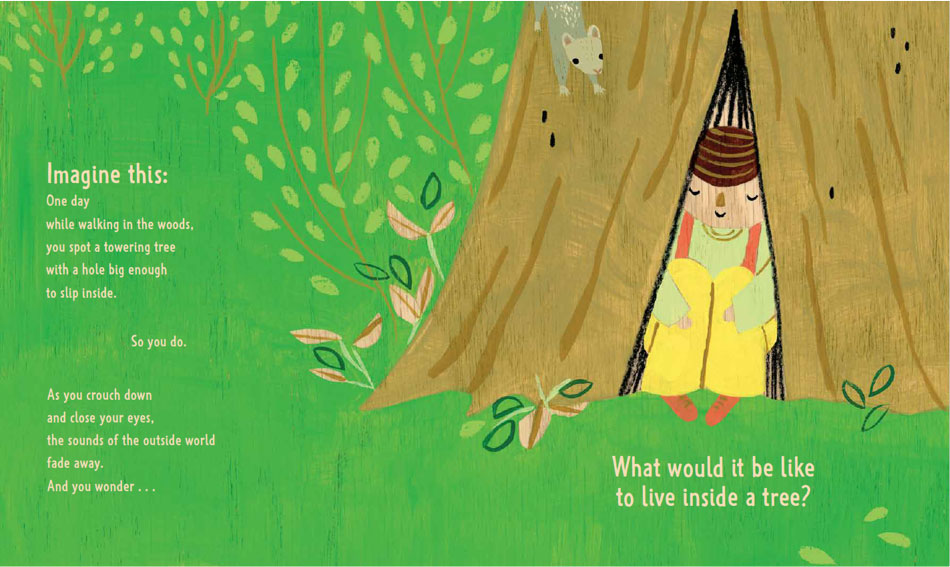
As I awoke the next morning, the beginning of the book popped into my mind.
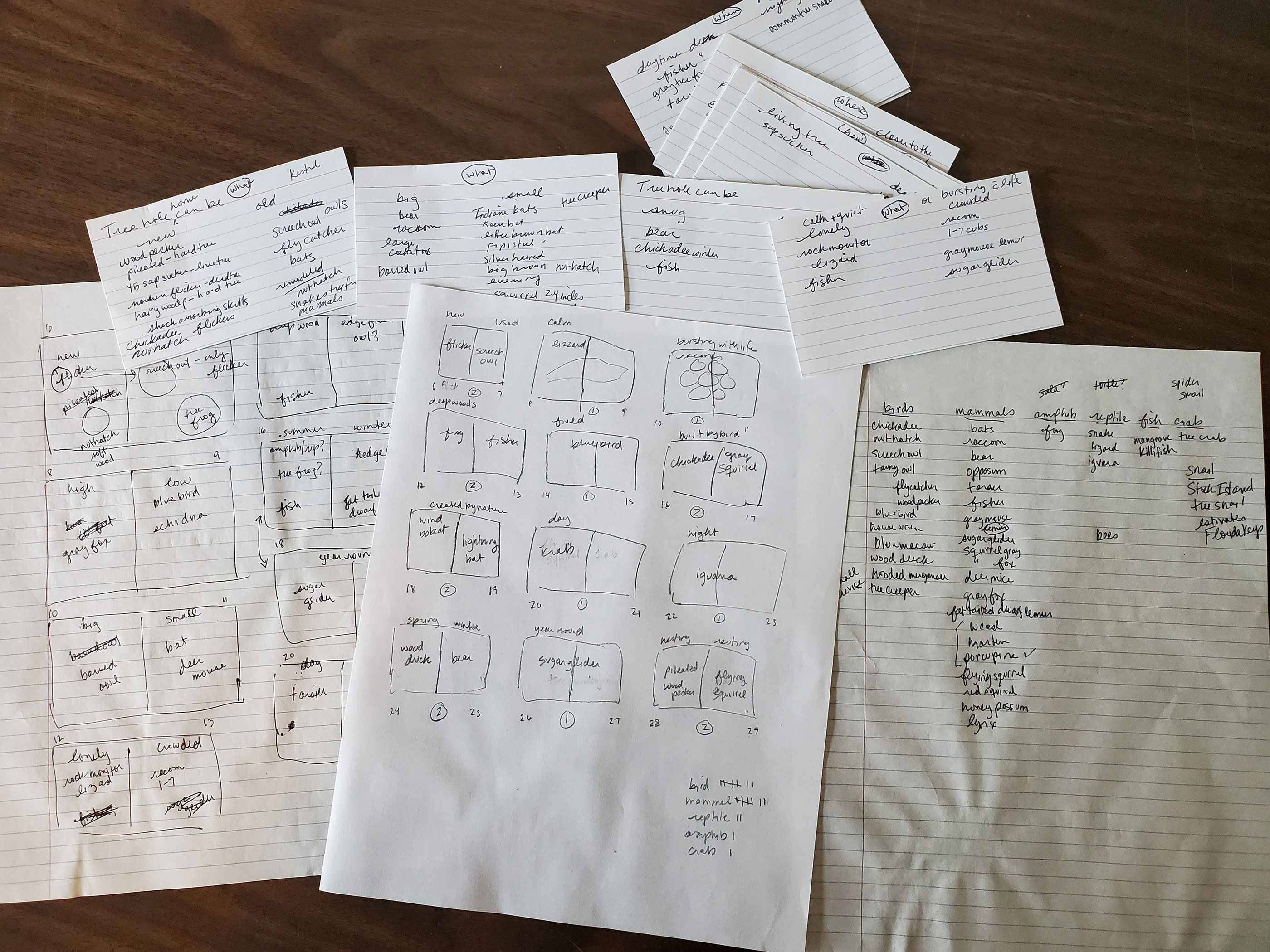
I ran to my office, and as I wrote it down, the text structure and calm, soothing, lyrical voice came to me in a flash of inspiration. Using index cards and sticky notes, I mapped out the book in just a few days. Then it was time to start playing with language — my favorite part of the process.
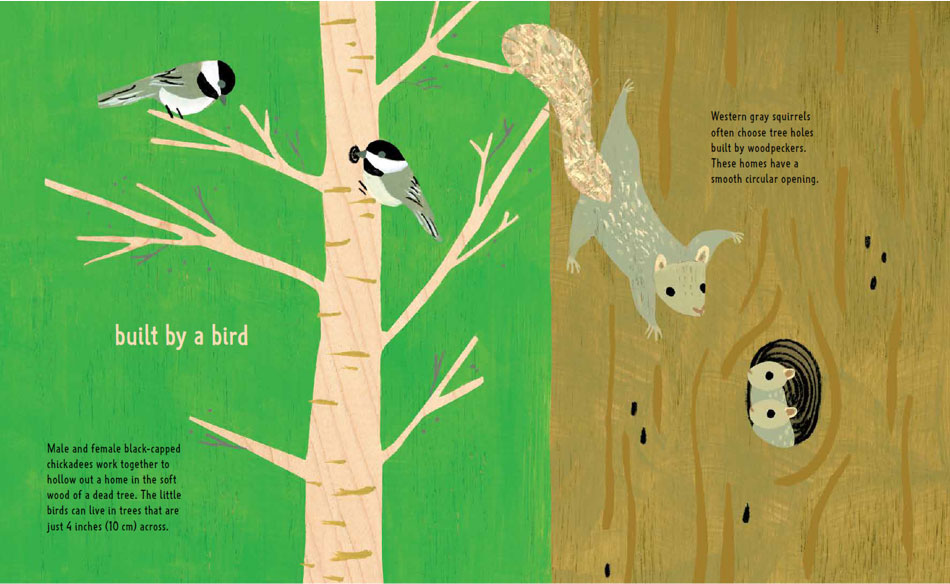
Eventually, I had a complete manuscript and found an editor who was interested in publishing it. I was thrilled when I saw the amazing artwork created by illustrator Amy Hevron.(opens in a new window) The whole book is painted on pieces of wood, and if you look closely at the tree trunks, you can see the grain of the wood. Amy’s art really takes our book to a whole new level.
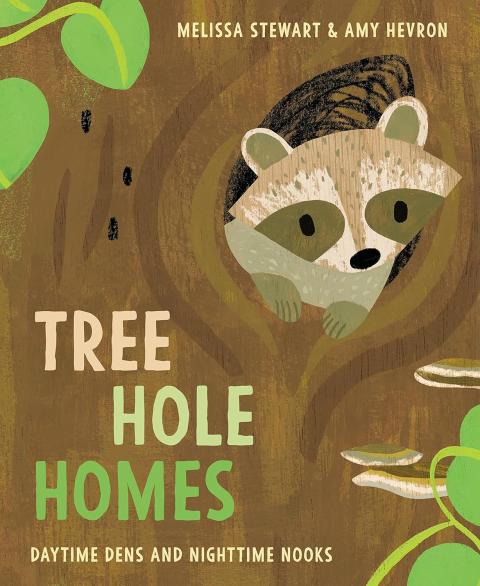
The animals included in Tree Hole Homes: Daytime Dens and Nighttime Nooks live in forests all over the world. But no matter where a tree hole is located, if it’s in a living tree, it probably formed in one of two ways. It was either built by a bird or created by nature. And you may be able to tell the difference by looking at it.
When the wind blows a branch off a tree, a thick lip forms around the wound. Over time, insects, fungi, and bacteria eat away at the wood. So if you see a hole with a thick lip, you know it was created by nature.
But if a hole a living tree has a smooth circular opening, it was most likely created by a woodpecker, such as a red-bellied woodpecker or yellow-bellied sapsucker. Other woodpeckers, such as flickers, pileated woodpeckers, and hairy woodpeckers, prefer to hollow out homes in the softer wood of a dead tree. So do chickadees.
The next time you’re walking in the woods, look carefully at any tree holes you encounter. Can you tell how they were made? Can you guess what kind of animal called it home? It’s fun to imagine what life is like for the creatures that share our world.
Resources
- Our video interview with Melissa Stewart
- Melissa Stewart official website(opens in a new window)
- Book Life: Exploring Rain Forest and Natural Places in Your Community by Melissa Stewart
- Tips and Tools for Nonfiction Book Talks by Melissa Stewart
- Start with a Book: Tree Trekkers(opens in a new window)
About the Author
Publication Date
July 9, 2025