


What did curiosity spark with your young readers this summer? In our house, it was robots. Specifically, could a robot with a camera be programmed to follow the cat around and record his antics? Why yes, it could — and, surprisingly, the cat was amused.
Watching my kids relish their uncertainty as they tested and retested the robot was a highlight of the summer. Though it might seem more challenging to make space for curiosity without the freer days of summer, the start of a new school year is an important time to think about how we can continue to spark and grow kids’ curiosity. Jane Kurtz(opens in a new window)’s guest post below is a wonderful example of where curiosity can lead when we follow our questions and passions — and a great model for both adults and young readers!
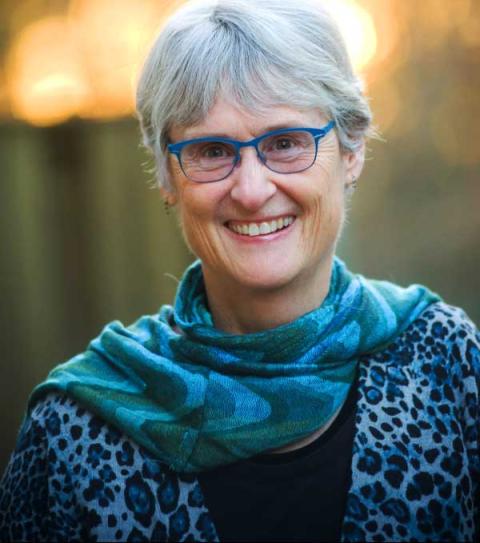
Thanks to her own curiosity, award-winning author Jane Kurtz has published more than 40 books — fiction and nonfiction, picture books and novels. In addition to being a curious writer, Jane is also an ambassador for literacy — especially in her childhood home of Ethiopia. She is one of the founders of Ethiopia Reads(opens in a new window), which has developed more than 80 libraries for children in Ethiopia, and also of Ready Set Go Books(opens in a new window), a program of Open Hearts Big Dreams(opens in a new window), that produces and distributes local language early readers to Ethiopian children.
Jane’s story and the stories she writes are excellent reminders of what can happen when we embrace the wonders of the world and keep asking questions about how things work and why.
What Is It about Dinosaurs? by Jane Kurtz
I’m eight years old. The canvas tent smells faintly like campfire smoke as my sisters and I help Daddy put it up. Wind is brushing against the cottonwood leaves.
I can’t stop thinking about what we saw — huge bones in a wall, as if a dragon had landed and rocks had gently folded around it.
I was a fairy tale kid. I knew my stuffed animals would never actually talk and those ferns with curled tips wouldn’t ever shake off their enchantment, but dragons had to be somewhere.
And here they were. Real.
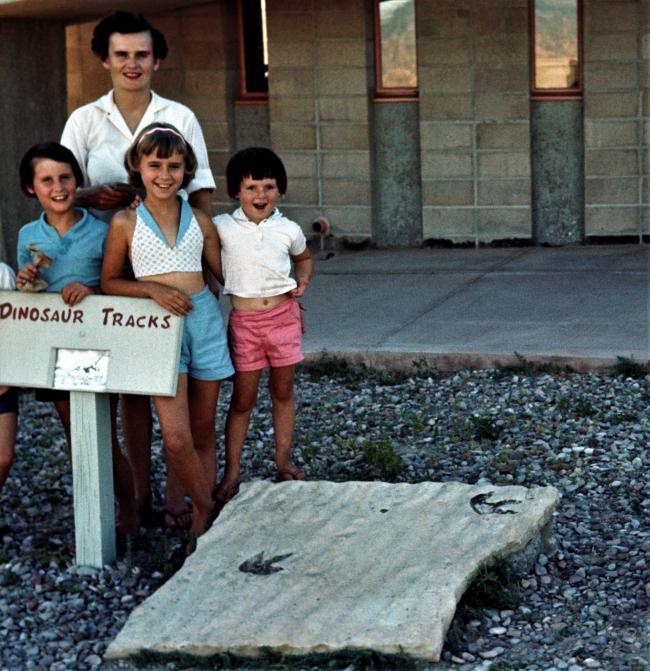
I walked out of the gift shop with smooth Brontosaurus, thunder lizard, in my pocket. Recently, I tried to capture that scene in my almost true story in verse, Oh Give Me A Home(opens in a new window). It has always stayed with me.
Much later, I had kids.
For my older son, it was the stomping and roaring. Especially T. rex.
For my younger son, it was the delight of memorizing the names.
We read books. We went camping and listened to park rangers explain about the meteor hurtling toward Earth. Poof. No more dinosaurs.
When one of my editors asked if I had ideas for a ready-to-read book about a real person, I thought about T. rex again. Who uncovered that amazing head? Those tiny arms? Ah-hah! It was Barnum Brown, the man they said could smell dinosaur bones. I went to see the skeleton he dug up in Montana, now at the American Museum of Natural History.
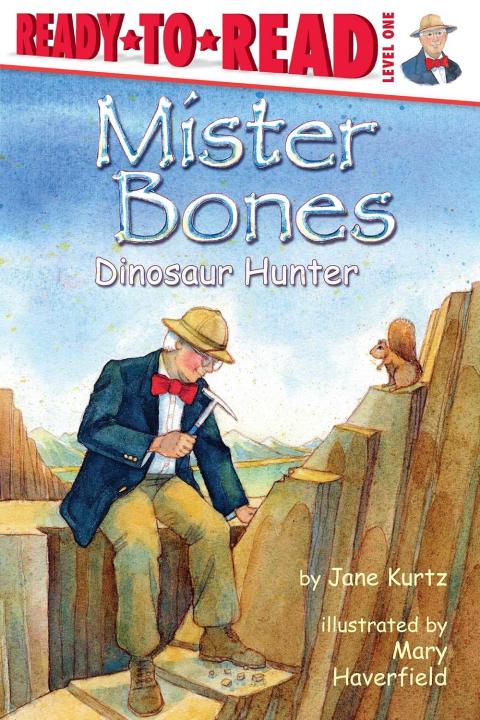
My book, Mr. Bones(opens in a new window), let me ask kids what they were curious about when it came to dinosaurs. I got to talk about good questions and how research is like a treasure hunt. I’d felt left out of science classes as a kid—too busy reading my fairy tales and pretending I was a horse. I thought science was about memorizing names like pistil and stamen and writing labels on worksheets.
Somehow dinosaurs had still gotten to me.
As an adult, I slowly fell in love with true stories told in interesting ways. Eventually, I published my first picture book that was labeled nonfiction: What Do They Do with All That Poo?(opens in a new window)
I told the editor of my poo book that I was reading a book for grown-ups about whatever happened to Brontosaurus. Did she know scientists were now studying dinosaur poo? I said I wanted to write next about dinosaur poo.
She said, “I want to know what happened to Brontosaurus.” Many drafts later, she published The Bone Wars: The True Story of an Epic Battle to Find Dinosaur Fossils(opens in a new window). Now I could share with kids an understanding of science as a drive to solve puzzles and explore mysteries. We could discuss how O.C. Marsh and Edward Cope ruined their lives, each fiercely wanting to name ALL THE DINOSAURS.
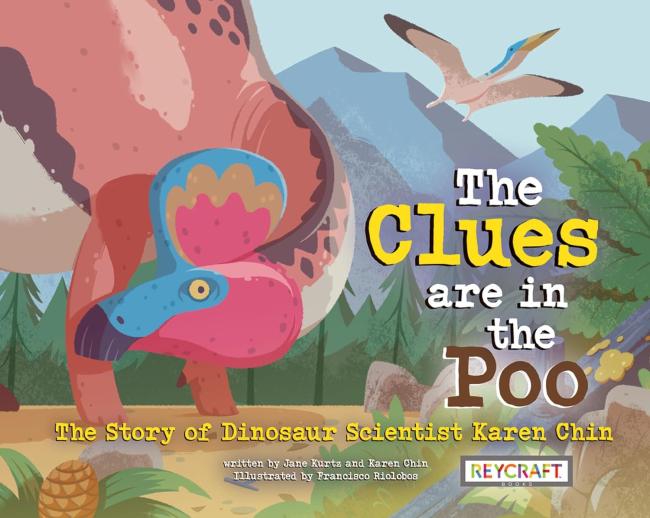
Not one to give up easily, I also flew to Colorado and interviewed Dr. Karen Chin about studying coprolites, fossilized poo. I asked if I could write a picture book biography with and about her. At first, she felt shy about the idea. But then she said she wanted kids to have models of scientists who look like her. So, we worked together on The Clues Are in the Poo: The Story of Dinosaur Scientist Karen Chin(opens in a new window). Now I had conversations with kids about what the world was like around dinosaurs and also about how people become scientists.
Honestly, I’m amazed that I’ve gotten to be this old without really understanding the ancient earth. Dinosaur bones fascinated me long ago. But Dr. Chin gave me context.
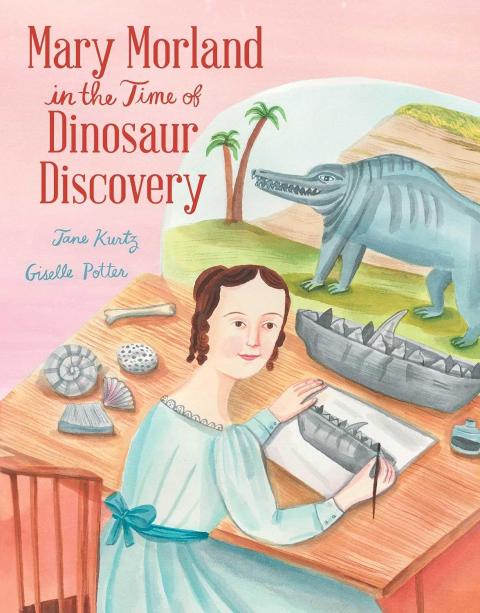
Once, she told me that some people mistakenly think O.C. Marsh came up with the name coprolite as a dig at his rival, Edward Cope. I started to read about the man who did invent that word. William Buckland also named the first dinosaur before the word dinosaur was invented. As I was reading about his boisterous, outrageous, science-y household full of children and animals, I got intrigued by his wife, Mary Morland, her fascination with fossils and drawing and experiments. Mary Morland in the Time of Dinosaur Discovery(opens in a new window) turned into a way to talk about history: the days when women didn’t go to school, the days when jumbles of old bones were being puzzled together and figured out.
What is it about dinosaurs? I know they’re my door into science. I’ll never stop wanting to learn about them and share the true stories of what I find out.
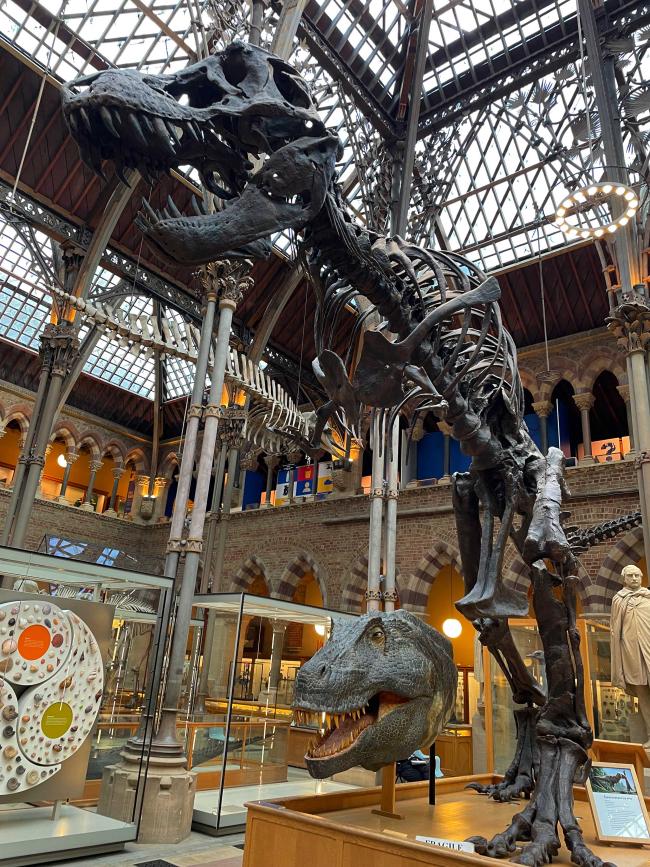
Oxford University Museum of Natural History
Resources
- Jane Kurtz website(opens in a new window)
- Start with a Book: Dinosaurs(opens in a new window)
- Start with a Book: DIY Science Camp: Be an Inventor!(opens in a new window)
- Colorín Colorado: Student-Generated Questions(opens in a new window)
About the Author
Publication Date
August 24, 2026