

Children tease and can sometimes play roughly, and caring adults can guide children towards kindness. But bullying is different. It is deliberate, done with the intention of hurting someone. It is repeated — a child who bullies often targets the same child again and again. And it involves a power imbalance, where the child who bullies usually chooses a classmate thought to be vulnerable in some way.
Bullying can express itself in these ways:
Physical: using physical actions to hurt, including hitting, pushing, kicking, and beating up
Verbal: using words to hurt, including yelling, name-calling, taunting, insulting, and threatening to harm
Social: using friendships to hurt, including excluding, spreading rumors, and turning friends against each other.
Cyberbullying: using cell phones, social media, and online gaming to send and widely share hurtful messages or images.
Bullying is a growing problem, affecting our schools and our communities. Increasingly (especially for older children), it is happening online, expanding the number of kids who get bullied and bully others. The internet can provide a shield for bullies to hide behind, but it certainly does not protect the targets of bullying.
The child who is being bullied feels the emotional or physical sting sharply and can feel powerless; classmates who witness the bullying often don’t know what to do; and the child doing the bullying is struggling, too, with anger issues and more.
How can schools and families work together to stop bullying? It starts with creating a school culture that embraces and celebrates diversity and differences, has zero tolerance for bullying behavior, embeds social and emotional learning (SEL) opportunities in classrooms and school events, and provides guidance for teachers on responding to bullying in a direct, effective, and loving way — supporting the child being bullied, the bystanders, and the child who is bullying.
There are excellent online guides and toolkits for schools to use, including Eyes on Bullying Toolkit(opens in a new window).
The powerful bookshelf
At Reading Rockets, we believe in the power of books to help children see the world from different perspectives and build empathy. Children who can empathize are able to respond to others with thoughtfulness and understanding. Why is my classmate wearing a headscarf indoors? A beautiful picture book about choosing a new hijab for the first day of school can open windows.
Through stories, children can meet characters who are dealing with strong emotions and who learn to manage those feelings in positive ways. What a powerful model for kids, especially when they’ve formed a personal bond with the vividly drawn characters.
Some children’s books tackle the tricky topic of how to handle conflicts at school or in the neighborhood. Sometimes it’s as simple as inviting the shy new kid to join in and play. Sometimes it’s about learning to find your own individual voice. And sometimes it’s about leaning on an understanding adult to help your classmates see your true strengths.
The messages in these stories can be subtle and powerful. They give kids a chance to reflect, think about their own beliefs and social interactions, and talk with their classmates and family about thorny issues.
Here are some of the books we recommend for strengthening social and emotional learning. Some of the books deal with bullying head-on.
Books about building empathy and perspective-taking, respecting others, and fitting in
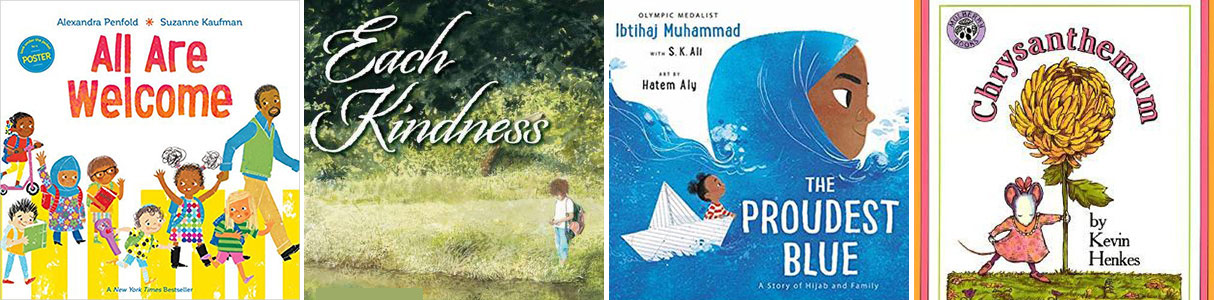
For children ages 3-7
- All Are Welcome(opens in a new window) by Alexandra Penfold
- Bully(opens in a new window) by Laura Vaccaro Seeger
- Chrysanthemum(opens in a new window) by Kevin Henkes
- Freckleface Strawberry(opens in a new window) by Julianne Moore
- Last Stop on Market Street(opens in a new window) by Matt de la Peña
- Lily Macaroni(opens in a new window) by Nicole Testa
For children ages 6-9
- The Can Man(opens in a new window) by Laura Williams
- Crow Boy(opens in a new window) by Taro Yashima
- Each Kindness by Jacqueline Woodson
- Families(opens in a new window) by Susan Kuklin
- The Hundred Dresses(opens in a new window) by Eleanor Estes
- I Walk with Vanessa: A Story About a Simple Act of Kindness(opens in a new window) by Kerascoët
- The Invisible Boy(opens in a new window) by Trudy Ludwig
- The Proudest Blue: A Story of Hijab and Family by Ibtihaj Muhammad
- Those Shoes(opens in a new window) by Maribeth Boelts
- Under My Hijab(opens in a new window) by Hena Khan
Books about building awareness of emotions and self-control
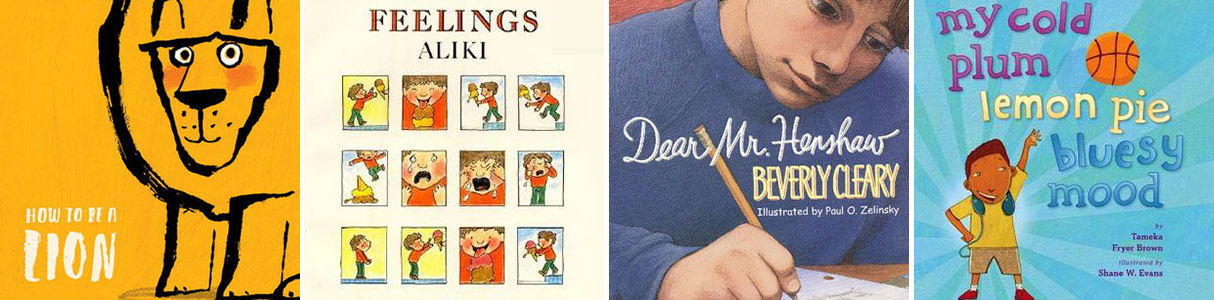
For children ages 3-7
- Feelings(opens in a new window) by Aliki
- How to Be a Lion(opens in a new window) by Ed Vere
- Lilly’s Purple Plastic Purse(opens in a new window) by Kevin Henkes
For children ages 6-9
- Anh’s Anger(opens in a new window) by Gail Silver
- Dear Mr. Henshaw(opens in a new window) by Beverly Cleary
- My Cold Plum Lemon Pie Bluesy Mood(opens in a new window) by Tameka Fryer Brown
- Zen Shorts(opens in a new window) by Jon Muth
Books about practicing conflict resolution
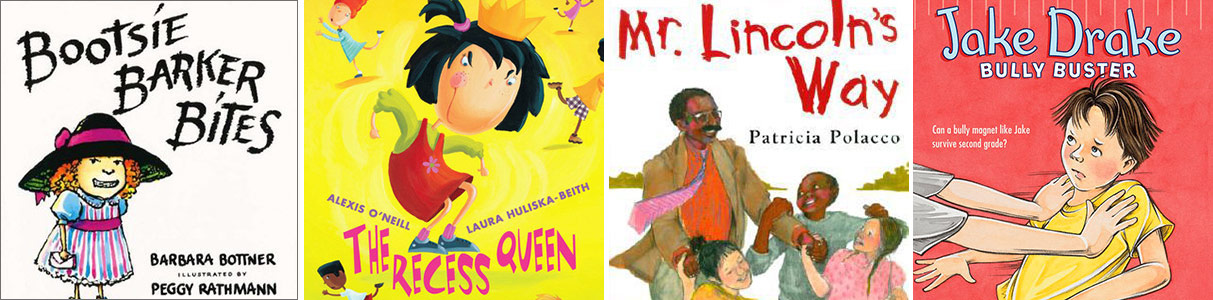
For children ages 3-7
- Bootsie Barker Bites(opens in a new window) by Barbara Bottner
- Can I Play Too?(opens in a new window) by Mo Willems
- Louder, Lili(opens in a new window) by Jennifer Choldenko
For children ages 6-9
- Clever Tortoise(opens in a new window) by Francesca Martin
- Enemy Pie(opens in a new window) by Derek Munson
- King of the Playground(opens in a new window) by Phyllis Naylor Reynolds
- Mr. Lincoln’s Way by Patricia Polacco
- The Recess Queen(opens in a new window) by Alexis O’Neill
- What James Said(opens in a new window) by Liz Rosenberg
For children ages 8-10
- Jake Drake, Bully Buster(opens in a new window) by Andrew Clements
- Shredderman: Secret Identity(opens in a new window) by Wendelin Van Draanen
Books about empathy, perspective-taking, emotions, and conflict resolution for older kids (ages 9-12)
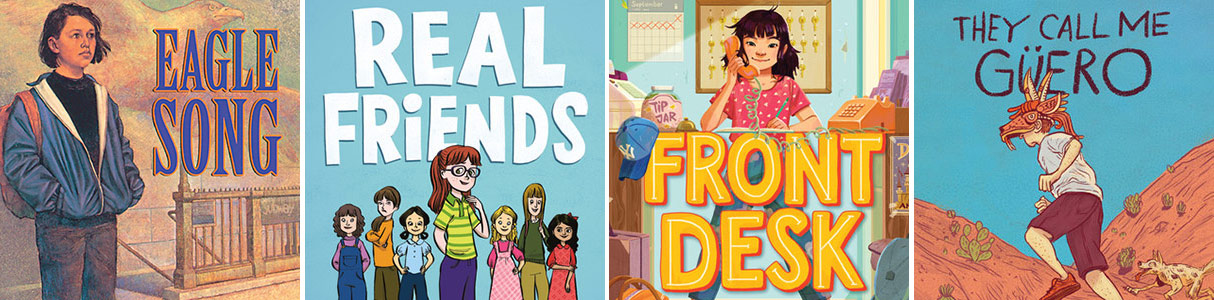
- Bully(opens in a new window) by Patricia Polacco
- Eagle Song(opens in a new window) by Joseph Bruchac
- Front Desk(opens in a new window) by Kelly Yang
- Real Friends(opens in a new window) by Shannon Hale
- Smile(opens in a new window) by Raina Telgemeier
- They Call Me Güero(opens in a new window) by David Bowles
- Download this article as a PDF in English(opens in a new window)
- Download this article as a PDF in Spanish(opens in a new window)
- View this article in Spanish(opens in a new window)
Reprints
You are welcome to print copies or republish materials for non-commercial use as long as credit is given to Reading Rockets and the author(s). For commercial use, please contact [email protected].