

Key Information
Focus
Appropriate Group Size
What is sentence combining?
We’ve all read pieces of student writing that go something like: “I walked to the park. I went down the slide. I played on the swing. I heard the ice cream truck. I ran to get in line …” Inexperienced authors tend to write a series of short, choppy sentences that follow a similar — or even identical — sentence structure.
Sentence combining is a technique for “smoothing out” choppy writing by varying sentence structure and making a piece of writing more engaging for the reader. In the “I went to the park” example, simply joining pairs of sentences by adding a conjunction (“I went down the slide and played on the swing. I heard the ice cream truck and ran to get in line.”) makes the piece more readable. Over time, students can progress from joining two short sentences to more sophisticated sentence combining strategies.
Why teach sentence combining?
- It helps students make their writing more readable and engaging.
- It creates opportunities to teach grammar and punctuation in a meaningful context.
- It shows students how and why to revise their writing.
- The process encourages interesting word choices and transition words.
How to teach sentence combining
Experienced writers know when to combine choppy sentences — and break up run-on sentences, too — without giving it much thought. Beginning writers, on the other hand, need to be explicitly taught. Since the most straightforward way to combine sentences is to merge two simple sentences into a compound sentence using a connector word, that’s a good place to begin instruction.
Once students are comfortable using connector words to combine sentences, they can be introduced to more sophisticated types of sentence combining, like pulling key words and concepts from an otherwise unnecessary sentence and embedding them in a base sentence.
Teacher modeling, discussion, and guided practice will help students internalize these strategies and begin to use them in revising their own writing and providing constructive feedback to other writers.
Below is a sampling of different kinds of sentence combining, including examples:
Producing compound sentences using conjunctions
Example:
The weather was perfect.
The girls were playing soccer.
The weather was perfect, and the girls were playing soccer.
See “conjunction … junction” example
Producing compound subjects and objects
Example:
The book was good.
The movie was good.
The book and the movie were good.
Inserting adjectives and adverbs
Example:
The girl drank lemonade.
The girl was thirsty.
The thirsty girl drank lemonade.
After several modeled and shared lessons, encourage students to combine sentences as a part of revising their own writing. Give students an opportunity to share sentences they combined. Discuss ways the revision improved the quality of the writing.
Watch a demonstration: 3 different ways to combine sentences
This video explains the grammar behind several kinds of connector words that can be used to combine sentences.
Collect resources
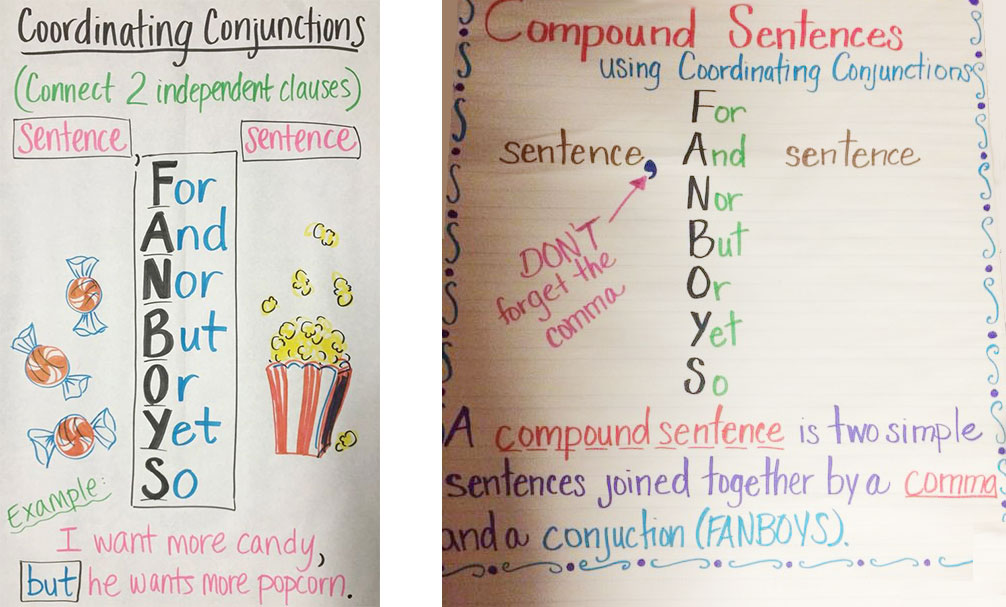
A FANBOYS (for, and, nor, but, or, yet, so) anchor chart can help students remember coordinating conjunctions they can use to combine sentences.
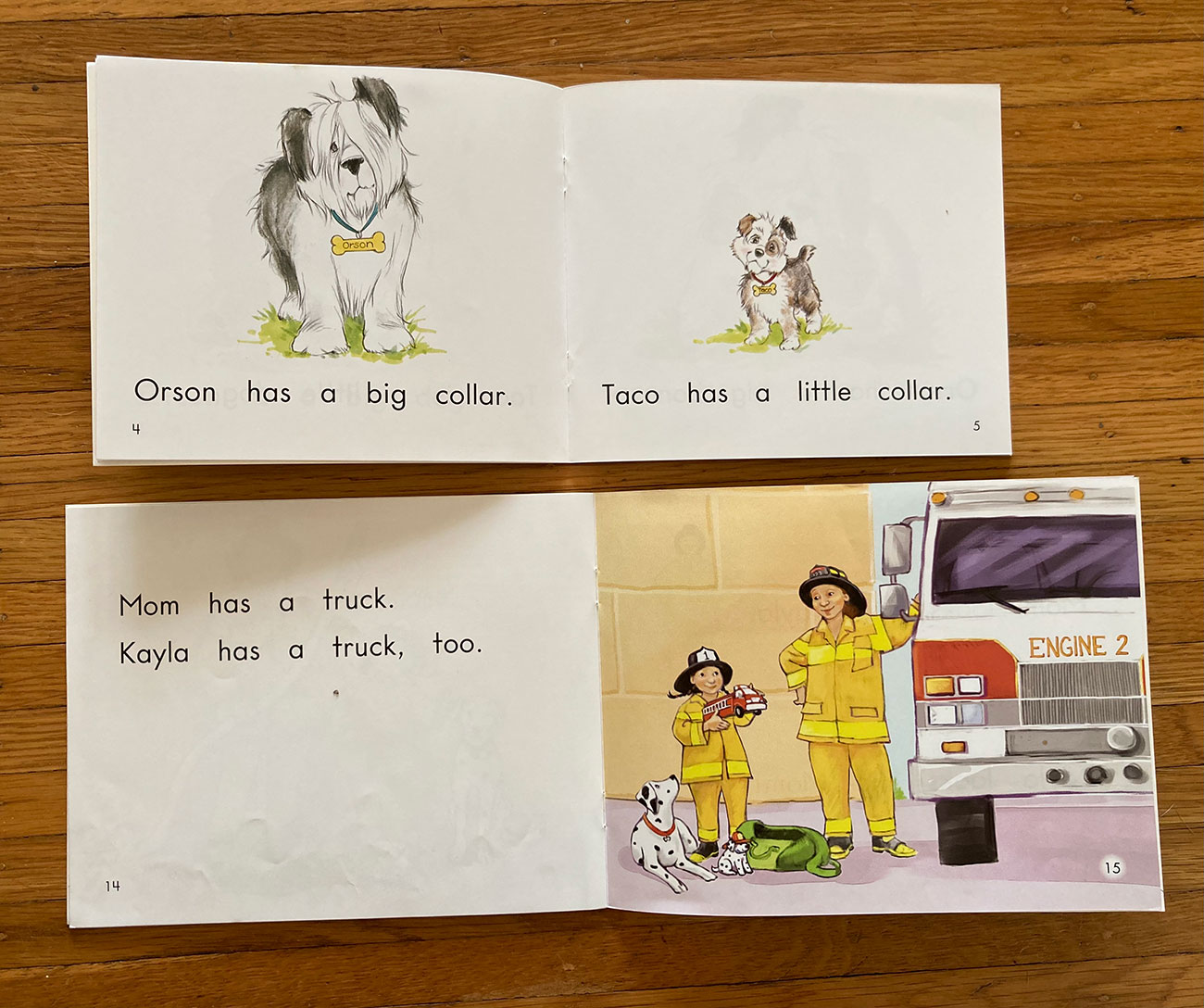
This Right to Read Project blog post outlines a lesson plan for teaching sentence combining using leveled, predictable books.
These Sentence Combining Cards and this Sentence Combining: Basics worksheet show some possible formats for guided and independent practice combining sentences.
Differentiate instruction
For second language learners, students of varying reading skill, and younger learners
- Begin sentence combining lessons with oral practice. If writing is challenging for some students, intentionally pair them with strong writers for cooperative work so they have peer support as they transition from speaking to writing their sentences.
- Make sure students have the vocabulary and background knowledge they need to understand the sentences that will be combined.
- Use sentences from familiar books and stories for modeling and practice.
- Provide extra support by underlining critical words in the sentences being combined. For example, “The cake was delicious. The cake was chocolate.”
- Vary the number and complexity of sentences being combined depending on students’ ability and experience with the strategy.
See the research that supports this strategy
Some of the research done that involves sentence combining comes from a whole language perspective. We”ve listed some of that research here. Our instructions for using sentence combining encourage a more explicit approach to using the strategy than what is included in some of the research listed below.
Graham, S., & Perin, D. (2007). Writing next: Effective strategies to improve writing of adolescents in middle and high schools — A report to Carnegie Corporation of New York. Washington, DC Alliance for Excellent Education.
Robinson, L. K., & Howell, K. W. (2008). Best practices in curriculum-based evaluation & written expression. In A. Thomas & J. Grimes (Eds.), Best Practices in School Psychology V (pp. 439-452). Bethesda, MD: National Association of School Psychologists.
Saddler, B. (2005). Sentence combining: A sentence-level writing intervention. Reading Teacher, 58, 468-471.
Children’s books to use with this strategy

Say Hello

Art and Max

One Boy
